
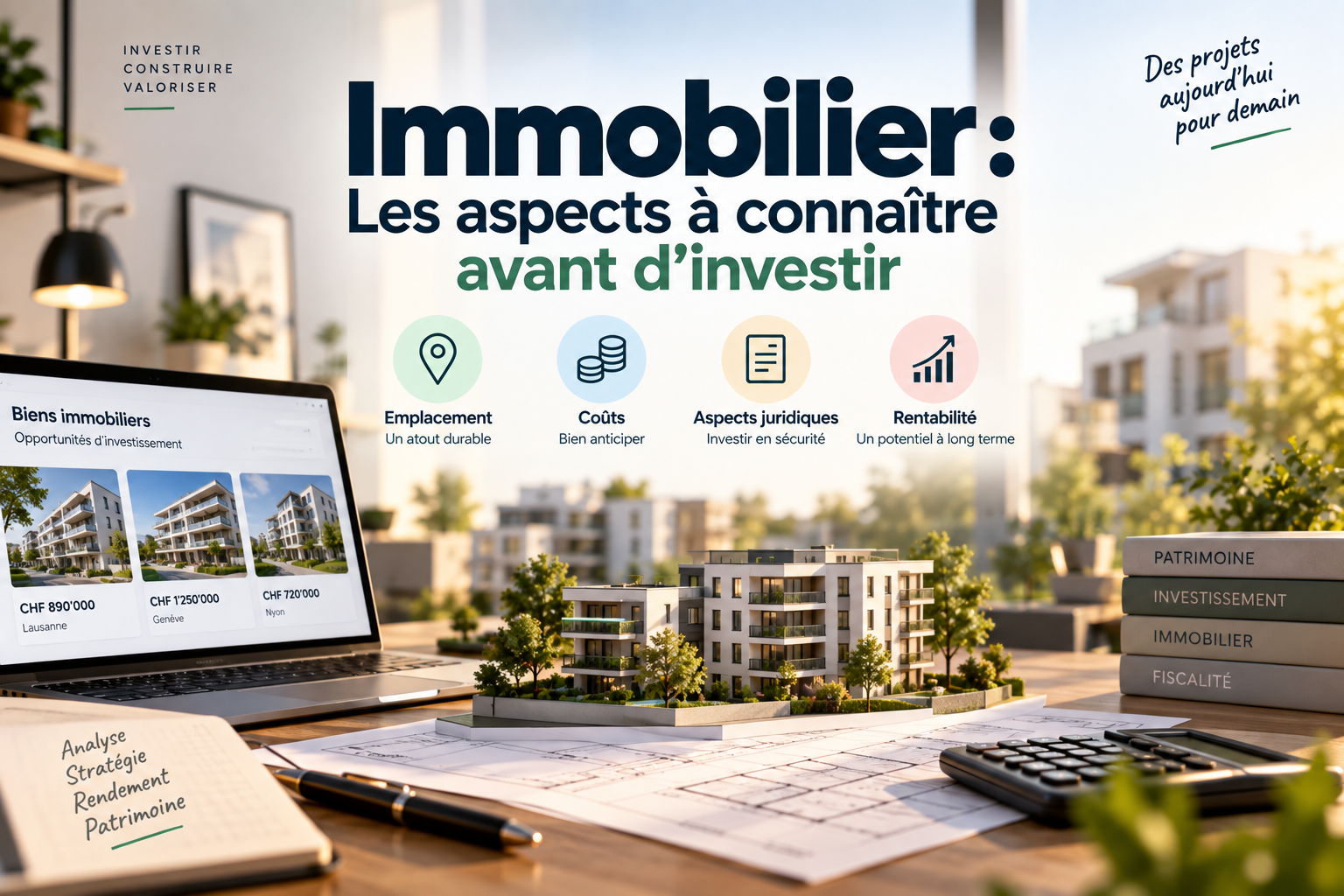
A good alternative to the stock market is the direct purchase of real estate. But in real estate there are aspects to know before investing 🧐
Recommended products


My journey with real estate investing
“Real estate is security. The best investment there is.”
How many times did I hear that phrase from my family growing up?
Having experienced real estate firsthand, I can tell you that the reality is much more nuanced. And if you think real estate is an effortless Eldorado, think again… I'm going to share my experience with you., no filter.
⚠️ Quick disclaimer before we begin: This article does not constitute not Investment advice. Real estate, like any investment, involves risks (and potential problems). It's up to you to form your own opinion!

1. Profitability: between myth and reality 📊
The basic calculation: purchase vs. rent
When we talk about real estate profitability, we often hear figures. tempting : “11% of annual yield, it’s possible!” Yes, it's possible. Sometimes. But that's the exception, not the rule.
In Switzerland, the reality is much more down-to-earth:
- Average gross profitability (price per m² vs. annual rent): ~3% (slightly more or less depending on the region and type of property) according to an article*
- In France, some cities offer gross yields of 8%. But beware : these figures do not take into account the actual costs.
👉 My observation After having explored the subject further, 3% of annual profitability, That's already considered a good return in most Swiss cities. And yet, it's Before having deducted all expenses…
2. Expenses: the black hole of profitability 💸
Suppose we found the super profitable property with 8% gross yield– That's good, but prepare yourself for a cold shower When you go to list all the expenses, here is a list. non-exhaustive :
- Taxes (on wealth, on rents)
- Charges (condominium ownership, maintenance, etc.)
- Insurances (building, civil liability, etc.)
- Interests (if you have a loan)
- Property tax
- Notary fees (from the moment of purchase)
- Management fees (if you go through a management company)
- Repairs (and here, it's a lottery… a roof to redo? 20,000 CHF. A broken boiler? 10,000 CHF. No one is safe.).
👉 My estimate : Account a minimum of 2% of the asset's value in annual expenses. And that's assuming everything goes well.
Result : 3% profitability – 2% expenses = 1% net. Nothing to get excited about…
And that's not even counting the rental risks :
- Unpaid rent
- Rental vacancy (a few months without a tenant, it happens)
- Management fees for dealing with problematic tenants
💡 The advice I wish I had received: Expenses will eat up a good part of profitability.
3. Capital gains: the pro-real estate argument 📈
“But real estate appreciates over time!”
Yes, that's true. According to the Federal Statistical Office, the real estate market in Switzerland has taken 3.3% per year on average between 2017 and 2023.
But :
- This is not not a guarantee for the future (prices may stagnate or even fall).
- It depends a great many from the region (Geneva ≠ Valais ≠ Jura).
Here is a table with a concrete example of this article:
| Job | % annualized average |
|---|---|
| Rental profitability | +3% |
| expenditure | -2% |
| Capital gain | +3.3% |
| Estimated total | ~4.3% per year |
4.3% annualized per year according to the figures in this article.
On paper, it still looks interesting. But :
- This 4.3% is theoretical (and rather optimistic).
- It's necessary decades so that it truly compensates.
- And above all… We need to manage all of this..
When you think about it, a simple S&P 500 ETF has achieved a 20-year annualized average of 10%.
In other words, it would be possible to earn twice as much money with an S&P500 ETF, for half the work.
4. Time: the invisible investment ⏳
Buying real estate is almost like adopting a second job (unpaid).
Here's what awaits you:
✅ Administrative management (charges, insurance, taxes…)
✅ Condominium meetings (and neighbor disputes, a classic)
✅ Estimates and repairs (Finding a good craftsman is sometimes a quest)
✅ Debt management (if you have a loan)
And if you rent out your property, add:
✅ Visits with the candidates (when there are any…)
✅ Tenant selection (The wrong choice can cost you dearly)
✅ Inventory of fixtures, security deposits, rent reminders (Tenants who "forget" to pay do exist)
✅ Furniture repairs (if you are renting furnished)
👉 My experience I spent dozens of hours per year managing my assets. Hours I could have spent My family, my passions, or… my ETF portfolio (who does not ask no effort (after purchase).
5. The entry fee: a major obstacle 💰
Unlike an ETF where you can start with 100 CHF, Direct real estate is:
- Tens (or even hundreds) of thousands of CHF to invest all at once.
- Years of saving
- A mortgage for most buyers (and therefore years of reimbursement).
👉 The trap Many are discovering after the purchase if real estate truly suits them. And at that point, it's often too late to reverse course without losing money.

Real Estate: Things to Know Before Investing
Conclusion: Is real estate right for you? 🤔
My goal with this article? To give you a realistic view direct real estate.
✅ The positive points :
- Yes, there are good deals.
- Yes, the capital gain could be interesting in the long term.
- Sometimes, some people find happiness there.
❌ The negative points :
- Not very profitable once the fees have been deducted.
- Sometimes complicated to manage (especially if you manage it yourself).
- Risk (unforeseen events, rental vacancies, a stagnant market…).
- Expensive to enter (and on the exit side, with the sales fees).
My opinion
In my opinion, I will only buy direct real estate to buy my own house, and I will no longer invest a single cent in rental real estate.
Indeed, I think there are better opportunities with the stock market, for simpler management.
If you want If you absolutely need to add rental properties to your portfolio, I would aim for passive solutions., There are alternatives much simpler for example:
- SCPIs (Real Estate Investment Companies): You buy shares, and a team manages everything for you.
- REIT ETFs Funds that invest in publicly traded real estate. Diversified, liquid, and management-free.
(I will elaborate on these options in a future article on my “Investment” page)
FAQ: Real Estate: Things to Know Before Investing
Is real estate really profitable in Switzerland?
On average, the gross profitability (rents vs. purchase price) revolves around 3% in Switzerland, with variations depending on the region. But once the fees (minimum 2%) and the unforeseen events deducted, profitability net can fall to 1% or less.
My advice Don't count on real estate to make you rich quickly. It's an investment. long term, and the market still needs to be favorable.
What are the hidden costs when buying real estate?
Prepare yourself for a endless list :
- Notary fees (from the moment of purchase)
- Taxes (regarding wealth, rents, etc.)
- Condominium fees (if applicable)
- Insurances (building, civil liability)
- Repairs (roof, heating, plumbing... a real expense!)
- Management fees (if you go through a management company)
- Rental vacancy (periods without a tenant)
- Unpaid rent (every landlord's nightmare)
👉 Trick : Expect to pay 2% of the asset's value per year for the costs, and keep a emergency reserve for major repairs.
Will the value of my property necessarily increase?
No, nothing is guaranteed.
In Switzerland, the real estate market has taken 3.3% per year on average between 2017 and 2023, but :
- It depends a great many from the region (Geneva ≠ Bern ≠ Ticino).
- The market can stagnate (or even decrease) for years.
- THE economic crises or the demographic changes can impact prices.
👉 Key points to remember Added value is a bonus, not a certainty.
How long does it take to manage a property?
Much more than you think.
Between :
- L'’administrative (charges, insurance, taxes)
- THE repairs (quotes, tradespeople, follow-up)
- There rental management (viewings, tenant selection, property condition reports, rent reminders…)
Account several dozen hours per year. And if you have a problem (a difficult tenant, a water leak), it can quickly become a real puzzle.
👉 Alternative If you want to avoid that, the SCPI or the ETF REITs are solutions without management.
I don't have 500,000 CHF to invest. Can I still get into real estate?
Yes, but not live.
With a limited budget, you have two options much more accessible :
- SCPIs You buy some parts in a company that manages real estate for you. Diversified, passive, and hassle-free management.
- REIT ETFs Publicly traded funds that invest in real estate. Liquid, diversified, and with reduced fees.
👉 My opinion These solutions allow you to expose yourself to real estate without the constraints (and without going into debt up to your neck).
Real Estate: Things to Know Before Investing
Subscribe for the latest news
You have a frugalist or minimalist project and you want a training? Click ”here”.
My pages
- About me
- Saving / Frugalism
- Blog
- Shop
- Contact
- Training and E-book
- Invest
- Minimalism
- My account
- Newsletter
- Basket
- Order confirmation
Lastest Post
- After 10 years of investing in ETFs: which ETF would I choose?
- Financial freedom: why the first 100,000 are the hardest
- The best advice in the world to save
- The Neon bank, the summary
- How does digitalization influence minimalist?
How does this blog live?
Overall, this blog lives on sharing a frugal and minimalist lifestyle.
For a question of transparency towards the readers. All recommended products are in order to make life cheaper, simpler and to promote the essentials.
Basically, my only income with this blog comes:
- Trainings that I realize
- Promo codes for the products I use
- Donations that readers make in exchange for neutral information.
About me
I decided to create this blog to develop and help readers who are looking for a simpler and more economical life.
Compared to before, I was a person who consumed a lot until the day I realized that my consumption made me sadder and poorer 😑
Now I prefer the minimum of my needs to be happy and achieve my financial freedom.
Without realizingI started to focus on saving and investing to depend on a boss for as little time as possible and to speed up my personal projects.
For several years I have felt happy and I have become richer in a way that I would never have imagined given that I have an average salary in Switzerland.
It is for this purpose that I decided to create this blog. In order to share and learn with other people who seek freedom and simplicity 😉
Are you more of a minimalist or a frugalist, Jo?
I am as minimalist as I am frugalist. However, there are situations where I lean more towards an art of life.
To conclude, I think the most important thing is to feel comfortable in your lifestyle 😊
Real Estate: Things to Know Before Investing
Leave a Reply